Projects · Product
AI language-learning podcasts, at your level
An app that generates a two-host podcast episode on any topic, pitched exactly at the listener's CEFR level, in a couple of minutes.
Python · LLM pipeline · Text-to-speech · REST API · PostgreSQL
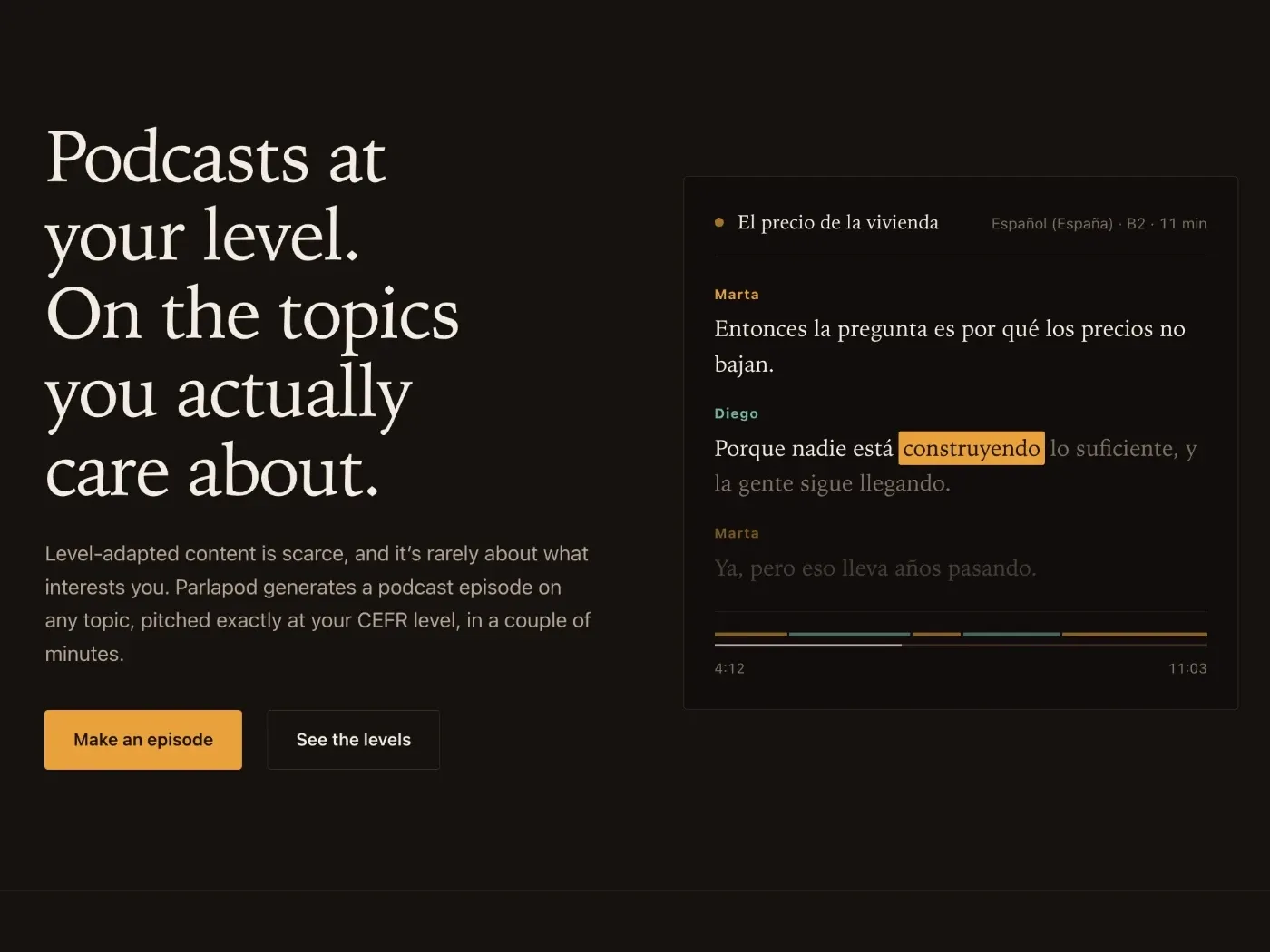
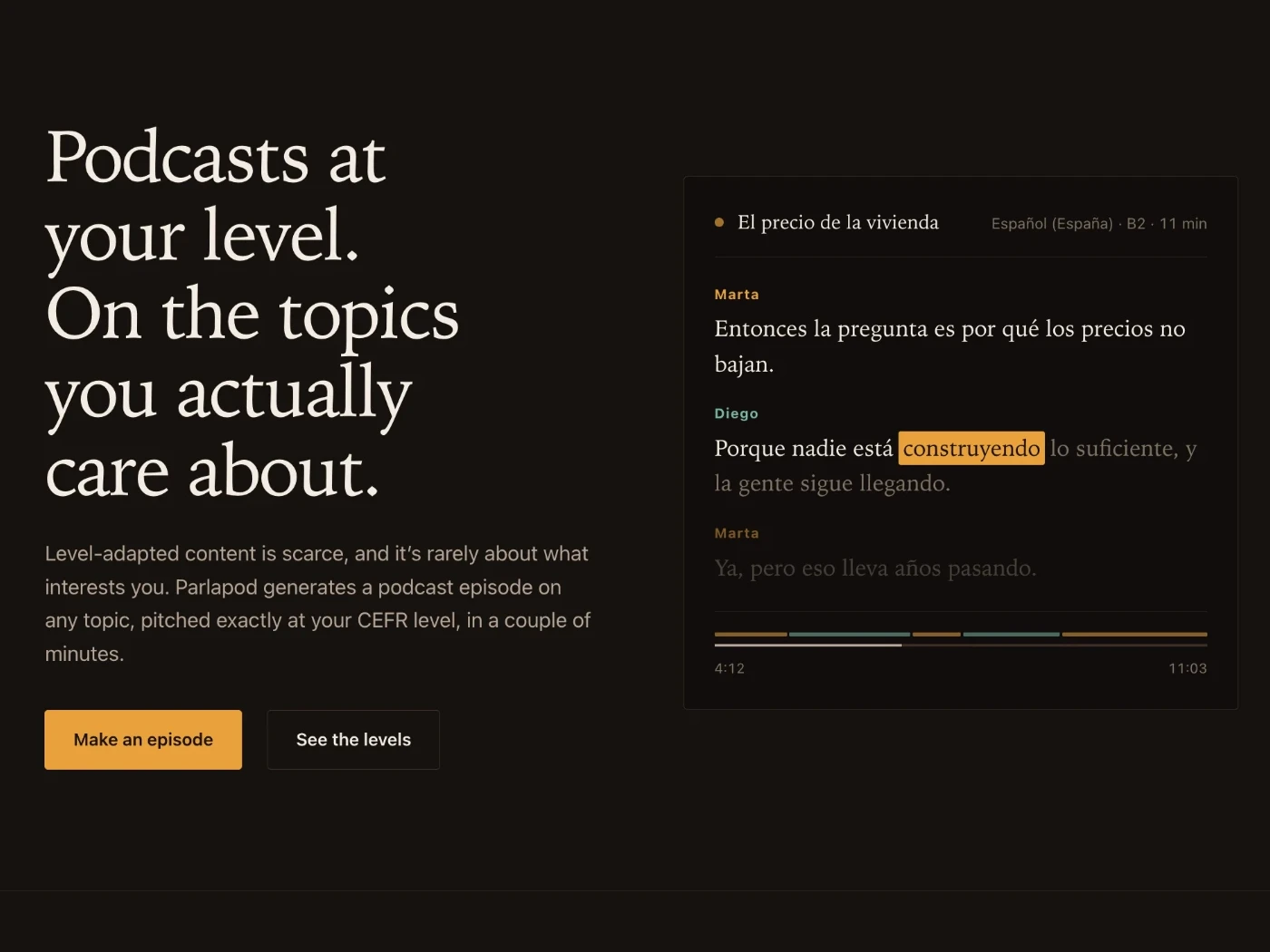
Home — the pitch, with a live transcript highlighting each word as it's spoken.
Why
Learners need lots of listening practice, and you can usually have the right level or the right topic, but rarely both:
- Learner content is pitched well, but there isn’t much of it, and it’s about ordering coffee and asking for directions.
- Native content covers whatever you’re into, but at full speed, with all the slang, assuming you already follow.
Level-appropriate material is scarce even in the major languages, and almost never about what actually interests you.
What it is
Parlapod generates a podcast episode from three choices:
- A topic — a concept, a genre, a book, a news article — anything.
- A language — Spanish, French, English, Catalan or Danish for now.
- A level — B1, B2 or C1. Each episode is written for the level you pick, not filtered from a back catalogue.
A couple of minutes later the episode is ready: two hosts talking the topic through, with every word on screen as it’s spoken. You choose who’s talking — each host’s voice, accent (Peninsular or Argentinian Spanish, Parisian or Québécois French, British or American English, Jutlandic or standard Danish) and personality (cynical, sarcastic, bubbly…).
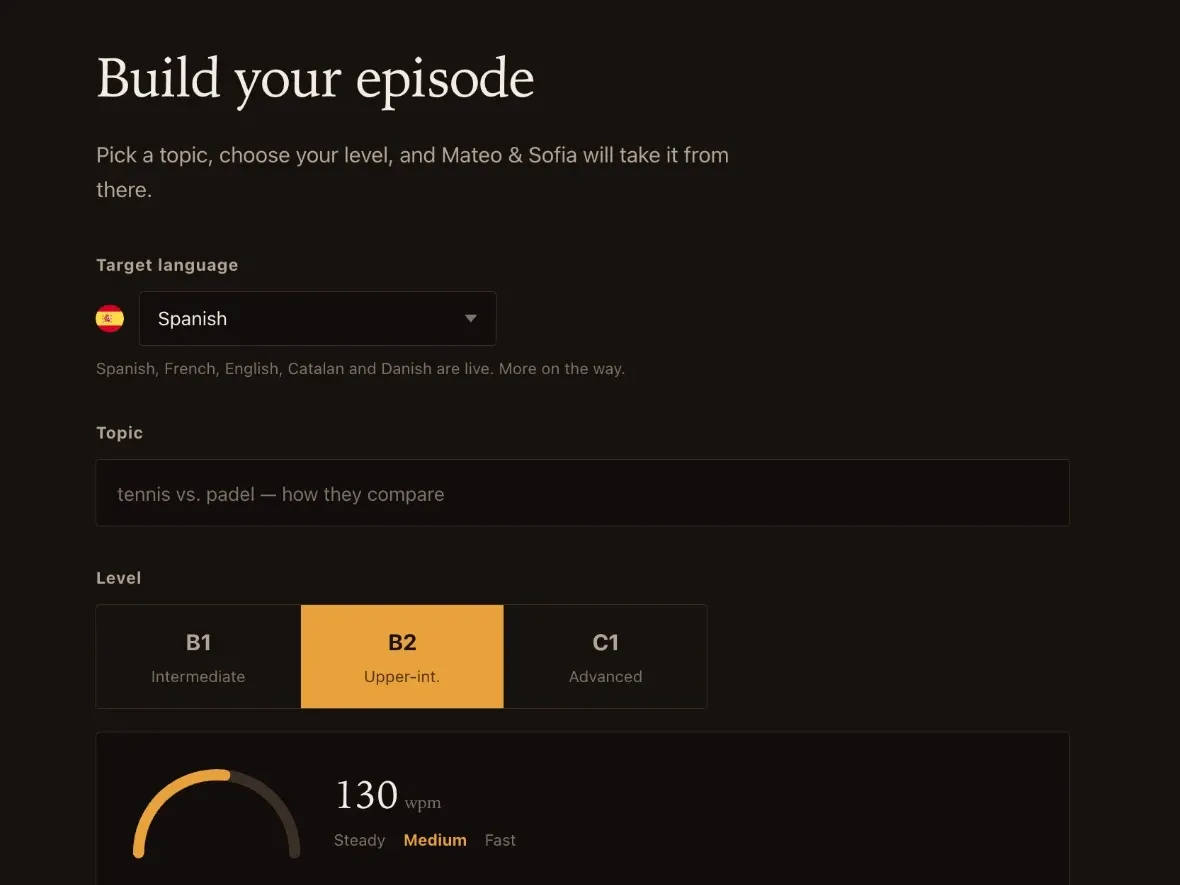
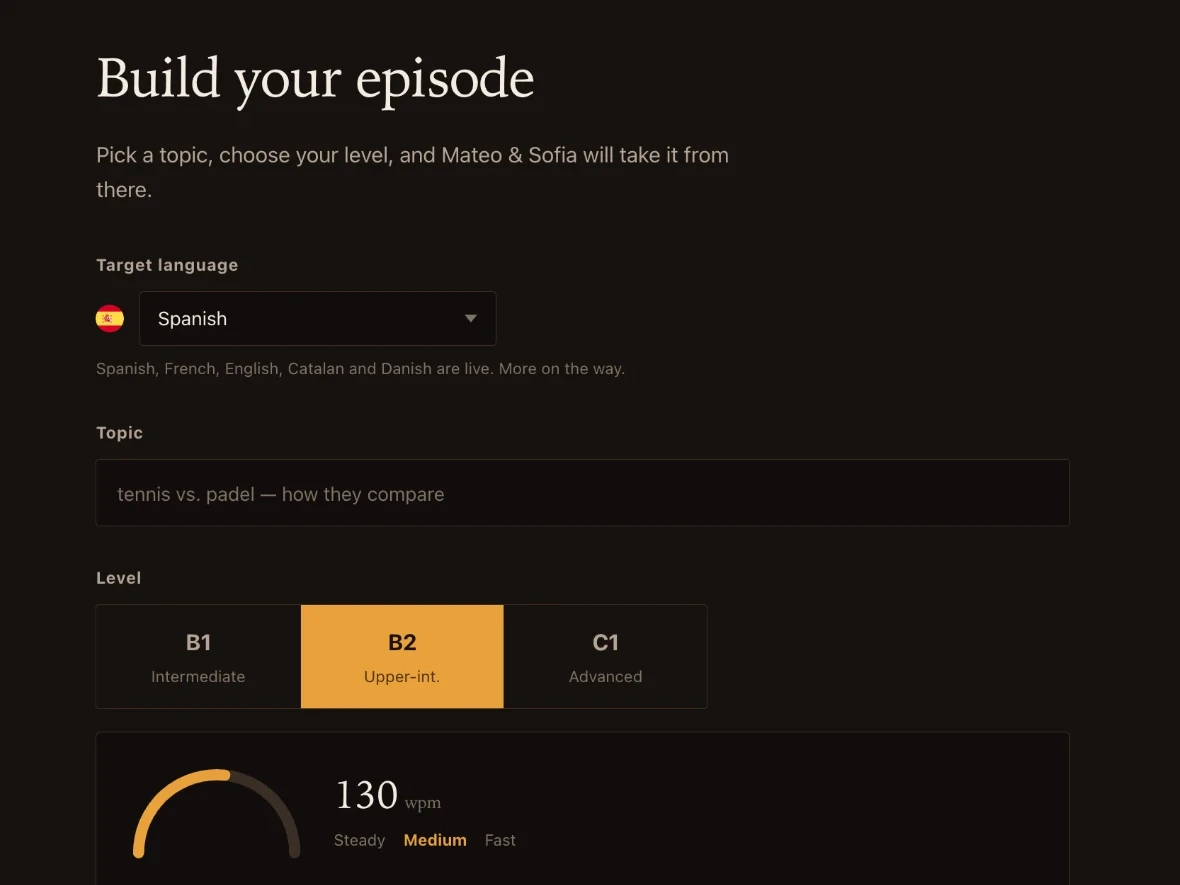
Studio — pick a language, any topic and a CEFR level. Speaking pace and listening goals follow the level. 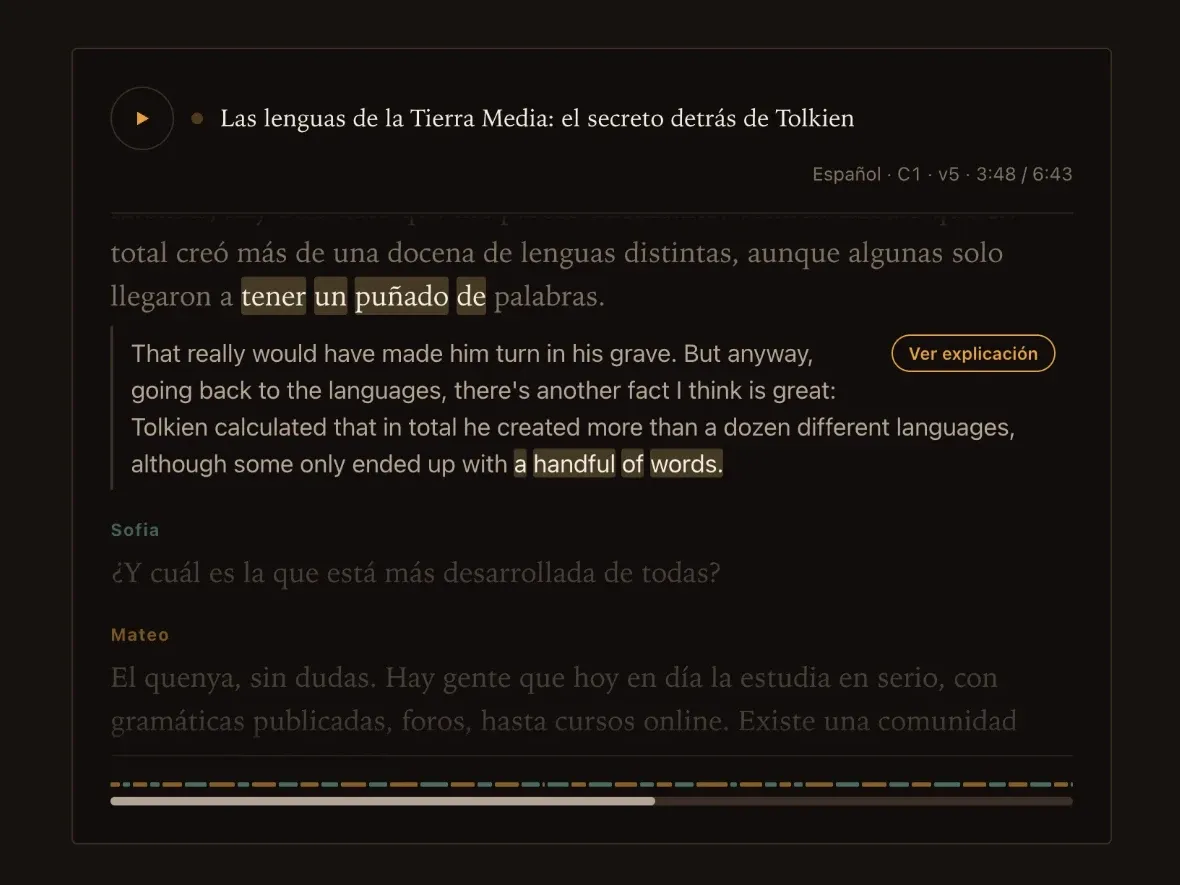
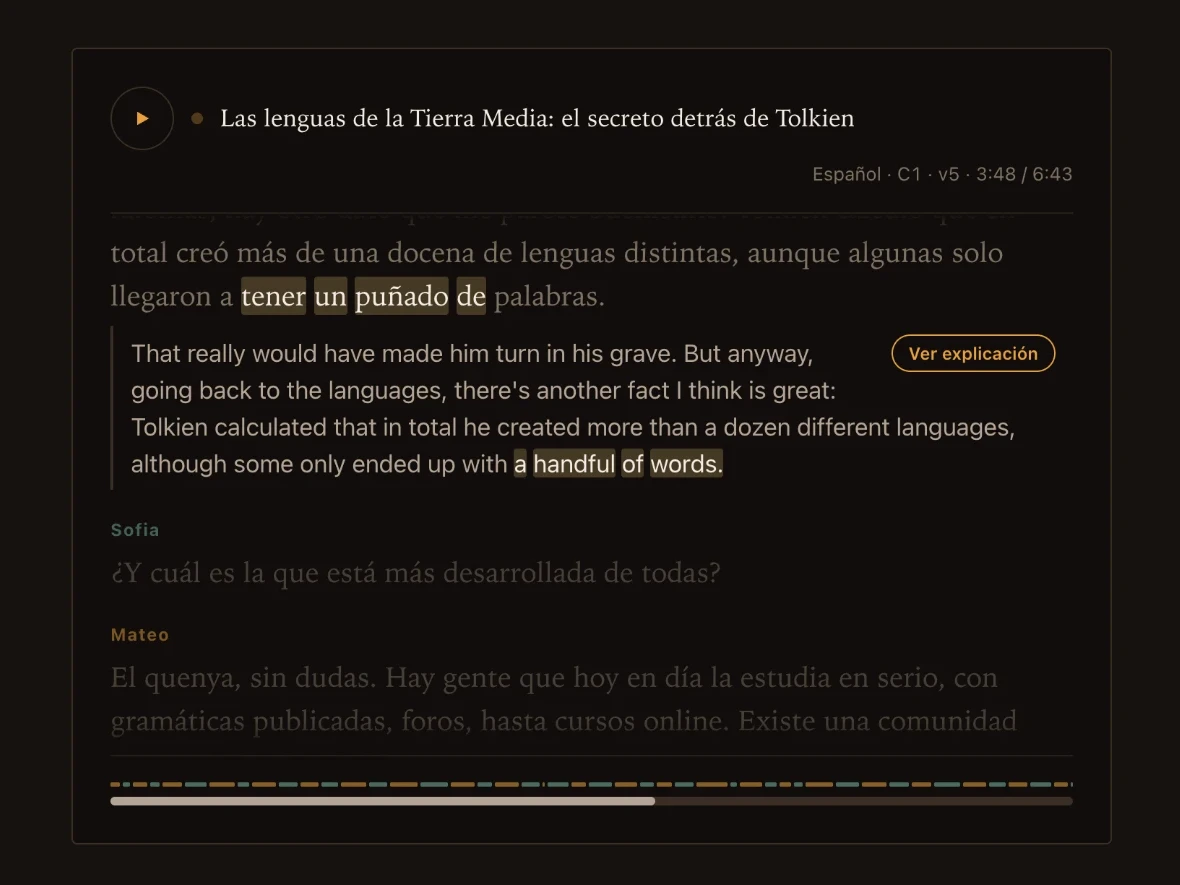
Player — tap a line for its translation, or ask for an explanation of a word or phrase. 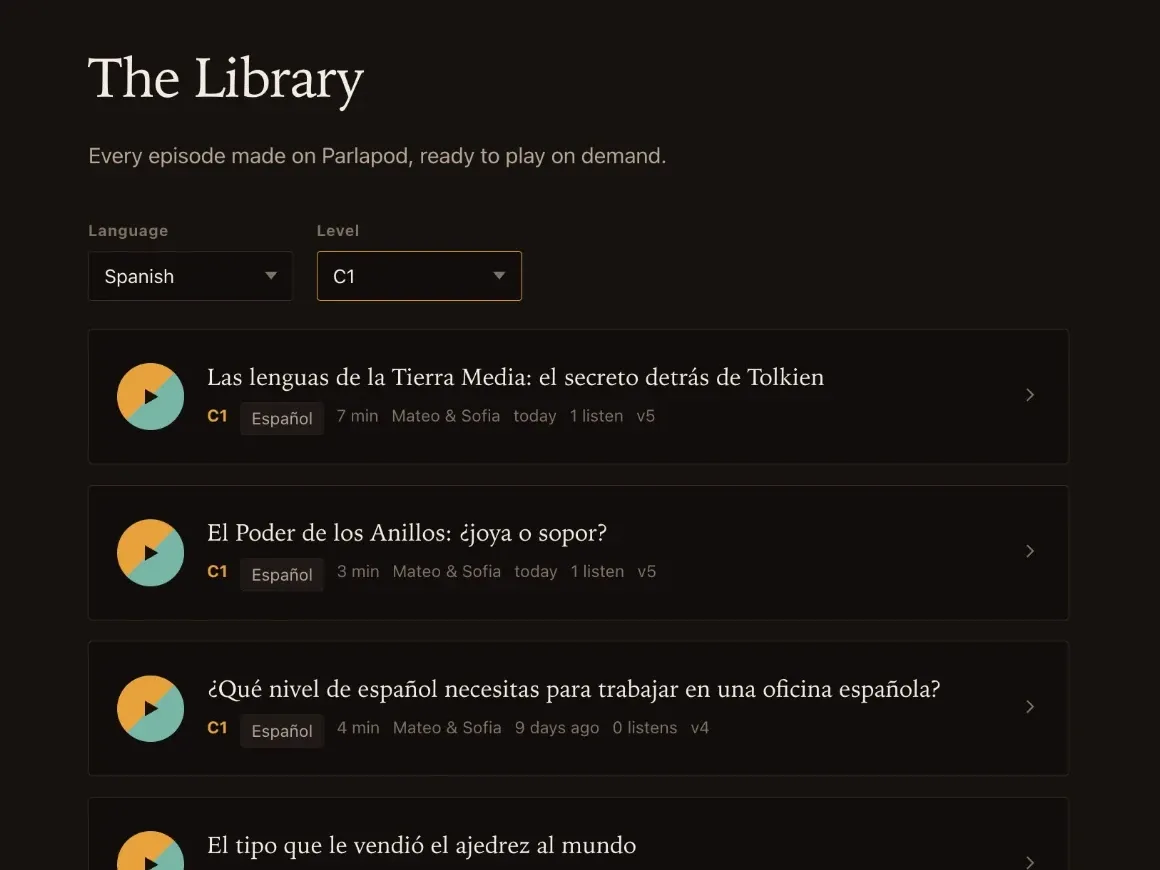
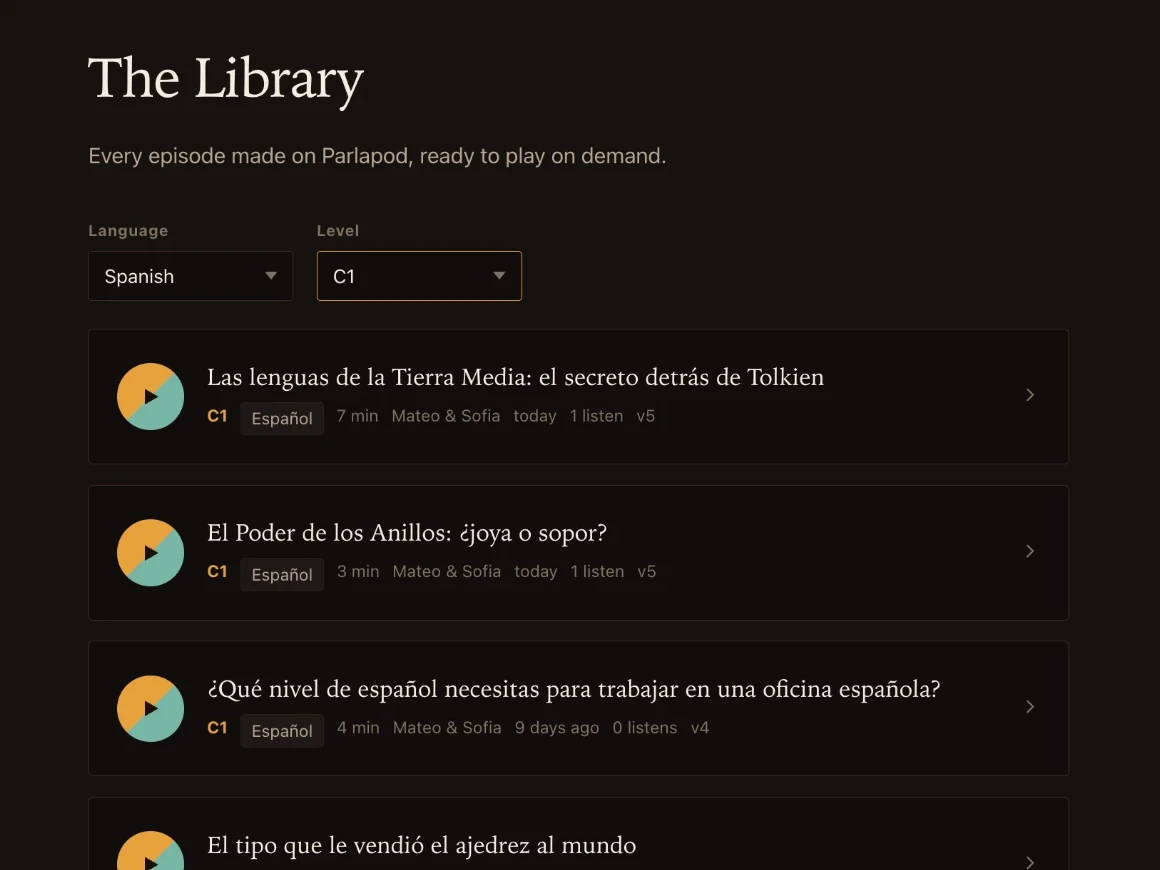
Library — every episode made on Parlapod, filterable by language and level. 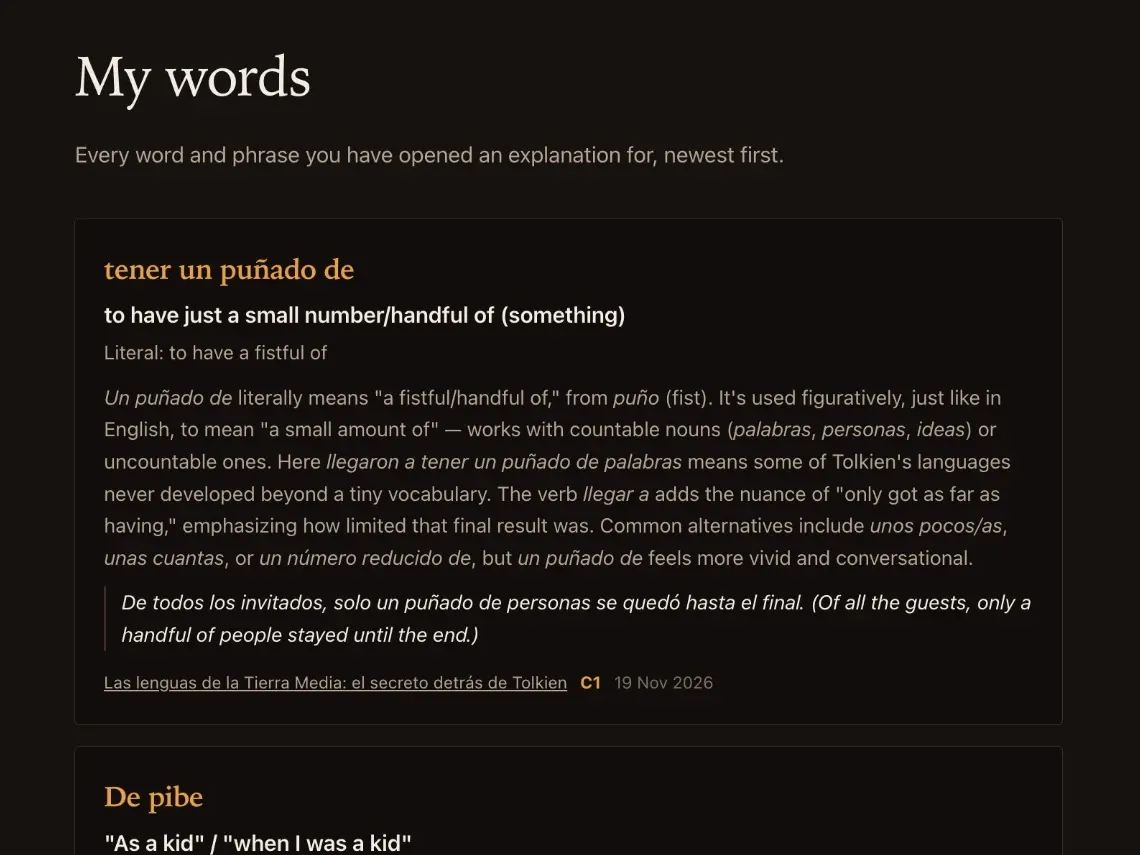
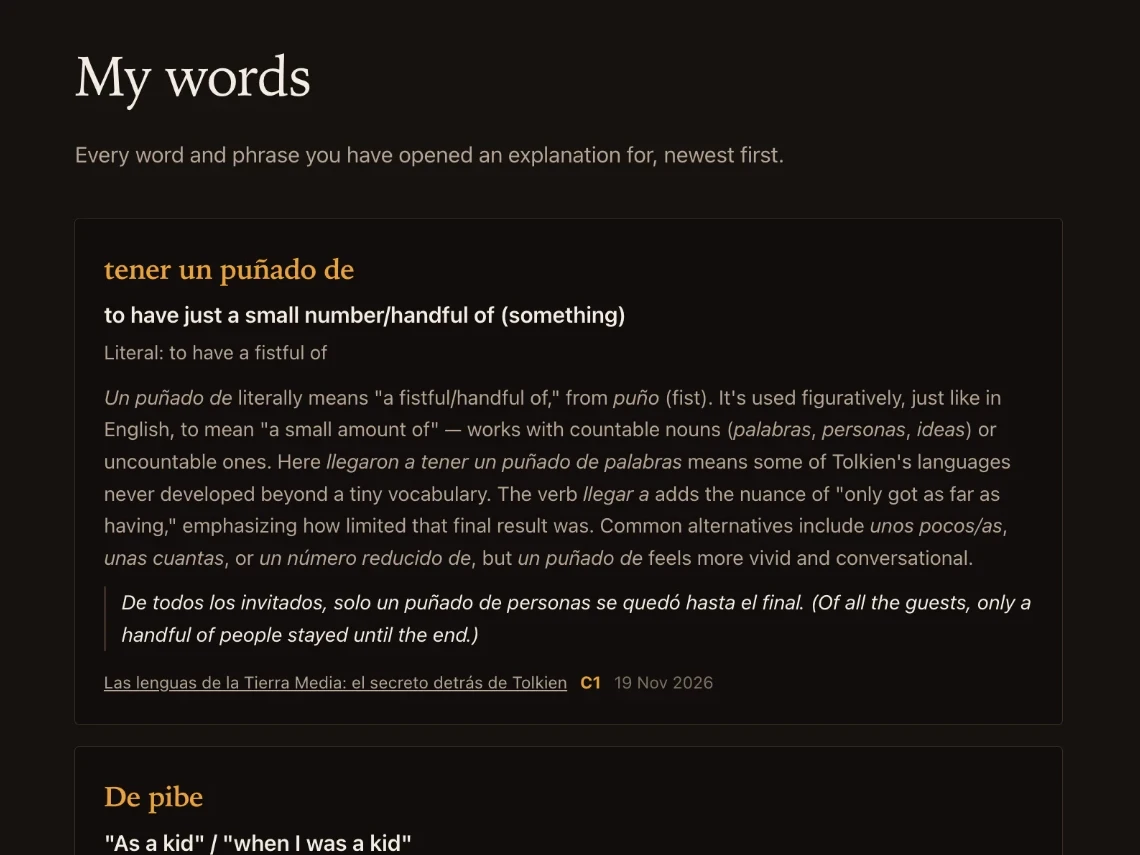
My words — every phrase you've looked up, with meaning, usage notes and an example.
Technical setup
- Script generation. An LLM pipeline writes a two-host dialogue on the chosen topic. Each level has its own rules for sentence structure, grammar and vocabulary, based on the Council of Europe’s CEFR listening scales (Companion Volume, 2020); for Spanish, the rules draw on the Instituto Cervantes Plan Curricular. The hosts’ personas shape how they talk — who asks, who disagrees.
- Speech. Text-to-speech renders each host with their own voice and accent. Speaking pace is set by level (around 130 words per minute at B2), and word-level timings let the transcript highlight each word as it’s spoken.
- Learning layer. Every line has a translation, and any word or phrase can be explained on demand: meaning, literal translation, usage and register notes, and an example sentence. Explanations are saved to a personal My words list, linked back to the episode they came from.
- Backend. A Python REST API runs generation as a background job and serves episodes, transcripts and timings from PostgreSQL. Episodes record which version of the pipeline produced them, so changes to prompts or voices can be compared episode by episode.
I use it a lot to practise my own Spanish, and a few friends use it at the moment too. I’m hoping to polish it for wider use!